X-Linked Ichthyosis
Less common form of ichthyosis occurring in approximately 1 in 6,000 births affecting only males, characterized by dark scales that usually spare the face, scalp, palms, and soles.
What Is X-Linked Ichthyosis?
X-linked ichthyosis is less common than other types of ichthyosis (occurring in approximately 1 in 6,000 births), can range from mild to severe, and occurs only in males.
Longterm Course
Overall severity does not change with time; distinctly worse in dry weather.
Key Findings
- Skin
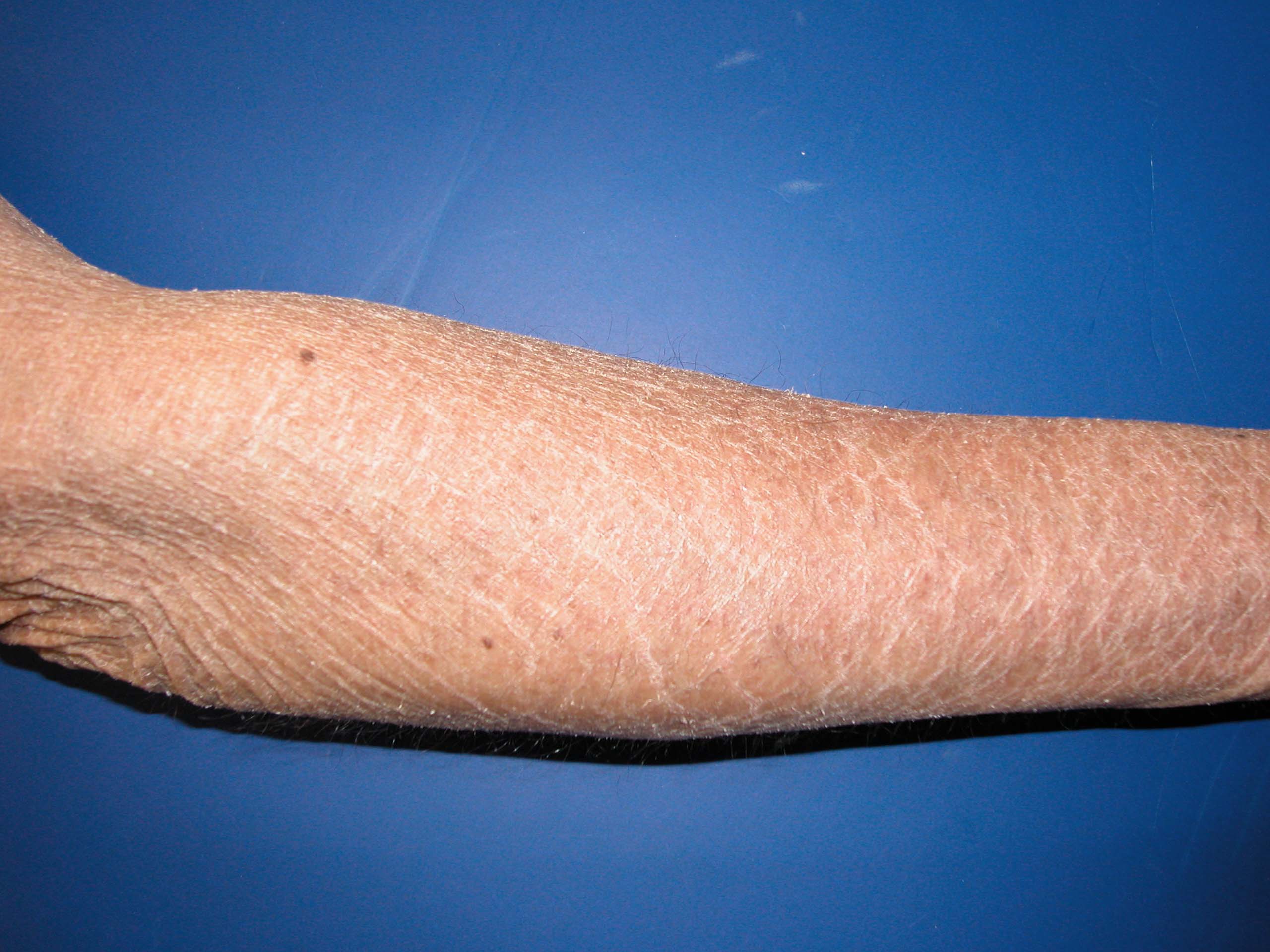
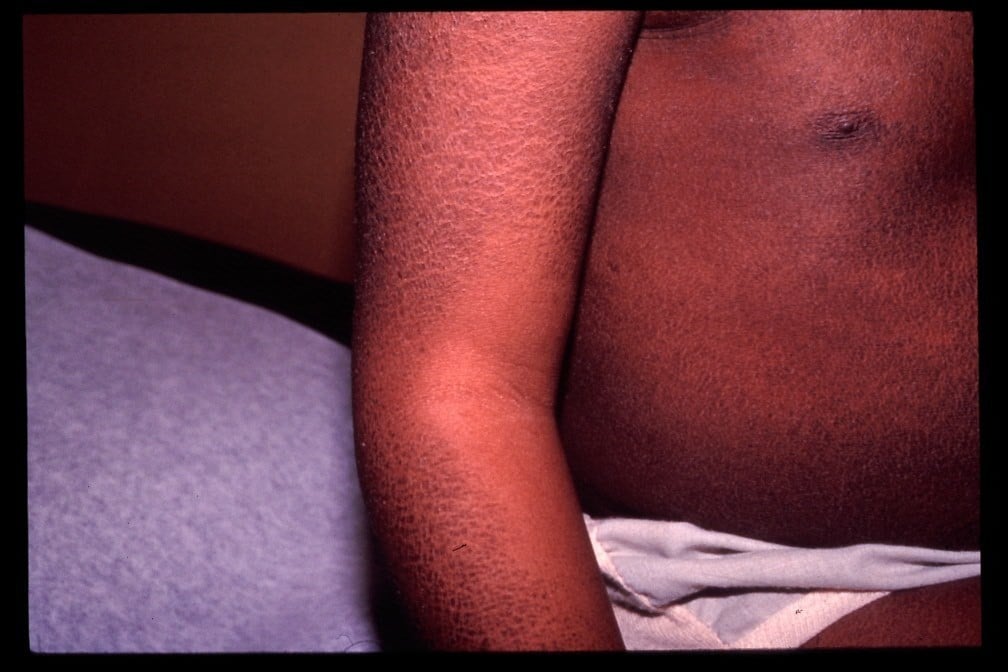
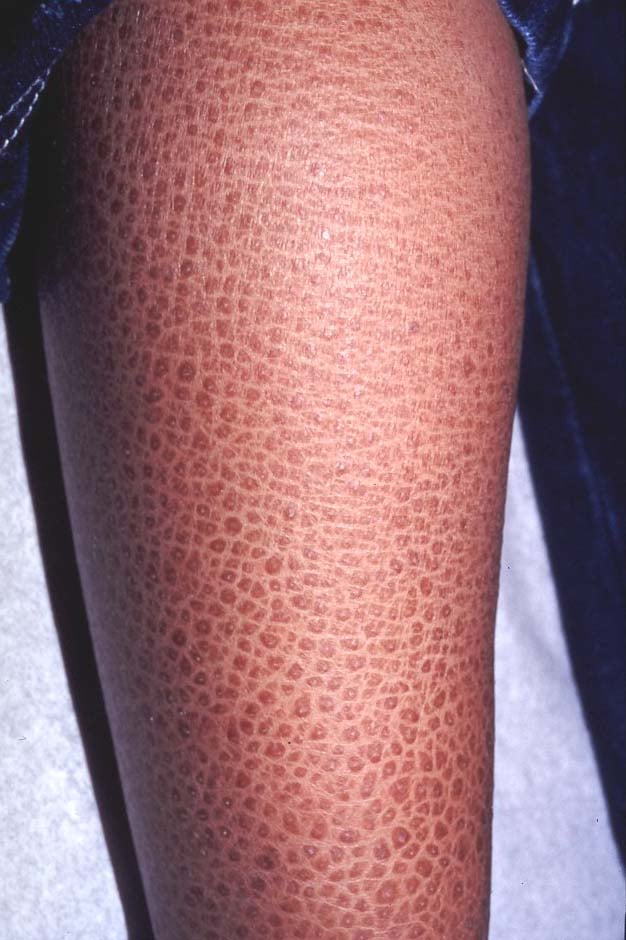
Small, dark, firmly adherent scales; accentuated on sides of neck and trunk; generally spares face, palms, soles, antecubital and popliteal flexures
Associated Findings
- Eyes
Asymptomatic, white spots in cornea (50%) - Genitals
Undescended testis (20%) - Nervous System
Intellectual impairment or other neurologic abnormalities (rare) - Obstetric
Non-progressive hearing loss
Clinical Resources
- Clinicians seeking to confirm a diagnosis should visit the Edvyce portal to submit a case to experts in ichthyosis.
- Learn more about FIRST’s Resources for individuals and families affected by Ichthyosis
- Information about current clinical trials and research studies can be found here.

Signs & Symptoms
In X-linked ichthyosis, the skin cells are produced at a normal rate but they do not separate normally at the surface of the stratum corneum (the outermost layer of the skin), and are not shed as quickly as they should be. The result is a build-up of scales. The scales of X-linked ichthyosis are often dark and usually cover only a portion of the body. Typically, the face, scalp, palms of the hands, and soles of the feet are free from scales, while the back of the neck is almost always affected. X-linked ichthyosis frequently improves in the summer. Babies with X-linked ichthyosis often appear normal when they are born, but the skin abnormalities will almost always show up by their first birthday.
How is it Diagnosed?
The genetic defect in X-linked results in a deficiency of the enzyme, steroid sulfatase. Genetic testing can detect the abnormality prenatally using amniocentesis or chorionic villus sampling (CVS). Decreased maternal serum or urine estriol levels and dehydroepiandrosterone levels can suggest X-linked ichthyosis in the fetus. Deficiency of the sulfatase enzyme in the placenta may result in failure of labor to initiate or progress.
X-linked ichthyosis is carried on the X sex chromosome. Women are unaffected but can carry the disease and pass it on to their sons. Men who have X-linked ichthyosis will have unaffected sons (they get their X chromosome from their mother), but their daughters will all be carriers. (For more information on the genetics of X-linked ichthyosis, refer to the Foundation’s publication, Ichthyosis, The Genetics of its Inheritance).
Approximately 50% of adult males and some female carriers will have asymptomatic comma-shaped corneal opacities (cloudy spots), which do not affect sight. Female carriers of X-linked ichthyosis occasionally report dry skin problems and, rarely, shadows of scales on the skin.
Doctors frequently use genetic testing to help define which ichthyosis a person actually has. This may help them to treat and manage the patient. Another reason to have a genetic test is if you or a family member wants to have children. Genetic testing, which would ideally be performed first on the person with ichthyosis, is often helpful in determining a person’s, and their relative’s, chances to have a baby with ichthyosis. Genetic testing may be recommended if the inheritance pattern is unclear or if you or a family member is interested in reproductive options such as genetic diagnosis before implantation or prenatal diagnosis.
Results of genetic tests, even when they identify a specific mutation, can rarely tell you how mild or how severe a condition will be in any particular individual. There may be a general presentation in a family or consistent findings for a particular diagnosis, but it’s important to know that every individual is different. The result of a genetic test may be “negative,” meaning no mutation was identified. This may help the doctor exclude certain diagnoses, although sometimes it can be unsatisfying to the patient. “Inconclusive” results occur occasionally, and this reflects the limitation in our knowledge and techniques for doing the test. But we can be optimistic about understanding more in the future, as science moves quickly and new discoveries are being made all the time. You can participate in research studies and also receive genetic testing through the National Ichthyosis Registry at Yale University or for more information about genetic tests performed you can visit GeneDx, www.genedx.com.
X-linked ichthyosis is carried on the X sex chromosome. Women are unaffected but can carry the disease and pass it on to their sons. Men who have X-linked ichthyosis will have unaffected sons (they get their X chromosome from their mother), but their daughters will all be carriers. (For more information on the genetics of X-linked ichthyosis, refer to the Foundation’s publication, Ichthyosis, The Genetics of its Inheritance).
Approximately 50% of adult males and some female carriers will have asymptomatic comma-shaped corneal opacities (cloudy spots), which do not affect sight. Female carriers of X-linked ichthyosis occasionally report dry skin problems and, rarely, shadows of scales on the skin.
Doctors frequently use genetic testing to help define which ichthyosis a person actually has. This may help them to treat and manage the patient. Another reason to have a genetic test is if you or a family member wants to have children. Genetic testing, which would ideally be performed first on the person with ichthyosis, is often helpful in determining a person’s, and their relative’s, chances to have a baby with ichthyosis. Genetic testing may be recommended if the inheritance pattern is unclear or if you or a family member is interested in reproductive options such as genetic diagnosis before implantation or prenatal diagnosis.
Results of genetic tests, even when they identify a specific mutation, can rarely tell you how mild or how severe a condition will be in any particular individual. There may be a general presentation in a family or consistent findings for a particular diagnosis, but it’s important to know that every individual is different. The result of a genetic test may be “negative,” meaning no mutation was identified. This may help the doctor exclude certain diagnoses, although sometimes it can be unsatisfying to the patient. “Inconclusive” results occur occasionally, and this reflects the limitation in our knowledge and techniques for doing the test. But we can be optimistic about understanding more in the future, as science moves quickly and new discoveries are being made all the time. You can participate in research studies and also receive genetic testing through the National Ichthyosis Registry at Yale University or for more information about genetic tests performed you can visit GeneDx, www.genedx.com.
What is the Treatment?
X-linked ichthyosis responds relatively well to topical treatment with alpha-hydroxy acids, which accelerate the shedding of the stratum corneum. Cholesterol containing emollients may also improve the scaling. (For more information on which products contain these ingredients, request the Foundation’s Skin Care Products List.) Alpha-hydroxy acids may sting the skin of babies and young children and should be used cautiously or in combination with another mild emollient product. X-linked ichthyosis is usually not considered severe enough to warrant the use of oral synthetic retinoids.
- Why do some women also display characteristics of X-linked ichthyosis? This article in Genetics in Medicine provides some insight
Types of Ichthyosis
- Congenital Ichthyosiform Erythroderma (CIE)
- Lamellar Ichthyosis
- Collodion Baby
- Darier Disease
- Epidermal Nevus
- Epidermolytic Ichthyosis
- Erythrokeratodermia Variabilis
- Erythrokeratodermia Cardiomyopathy Syndrome
- Harlequin Ichthyosis
- Ichthyosis Vulgaris
- Ichthyosis with Confetti
- Keratitis-Ichthyosis-Deafness (KID)
- Netherton Syndrome
- Pachyonychia Congenita
- Palmoplantar Keratodermas
- Sjögren-Larsson Syndrome
- X-Linked Ichthyosis
- Chanarin Dorfman Syndrome
- CHILD Syndrome
- Conradi-Hünermann
- Ichthyosis Hystrix with Deafness (HID) Syndrome
- Ichthyosis Hystrix Curth-Macklin
- Refsum Disease
- Trichothiodystrophy
Phenotype Names
X-linked ichthyosis, steroid sulfatase deficiency; recessive X-linked ichthyosis
EDD Name
STS-sEDD
OMIM
Inheritance
X-linked recessive
Incidence
1:2,000 – 1:9,500
Diagnostic Tests
Cholesterol sulfate level in blood; chemical or fluorescence analysis of cellular DNA
Age of First Appearance
May be present at birth; often not noticed for months or years.
Abnormal Genes
steroid sulfatase
Primary Symptom Photos