
Bonding & Breast Feeding
“After we were finally allowed to hold baby Joshua in sterile blankets and a cap, ourselves outfitted in sterile gloves and gowns, we could not resist the joy of kissing his forehead when no one was looking.” – FIRST Member
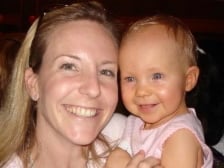
“When Logan was born as a collodion baby, I didn’t understand that that how he looked at birth, with distorted facial features and swollen fingers, wasn’t permanent. I thought about all the worst case scenarios of what it meant to have ichthyosis. I would suggest trying your best to stay positive, surround yourself with positive people, and read positive stories. Many ichthyosis parents report that the condition gets better with time both emotionally and physically.” – FIRST Member Camilla Strickler
It Takes Time
Take a deep breath, relax, and give yourself time. Initial rejection is not abnormal, and it can be worked through. You must allow yourself, your spouse, and your family time to grow close to your new baby. Often, before this can happen, you must cast aside your preconception of the “perfect” baby and get to know your child. You must put your fear aside and look beyond your baby’s unusual skin. Remember that beneath the skin is an infant who needs to be loved. Hold your baby as soon as you can. Hugging, kissing, and stroking your baby will help you bond. Almost at once you will begin discovering your baby’s special qualities. All babies have them.
If for some reason you are told not to handle your baby (some types of ichthyosis prohibit immediate handling), or if you just don’t feel comfortable with the idea at first, do what you can to let your baby know you are there. Hold your baby’s hand, stroke his or her head, read a story or sing a song. Your baby is one of the few people who will never get tired of hearing your voice. In fact, your voice is so soothing to your baby. Consider taping yourself reading or singing to comfort him or her while you are away.
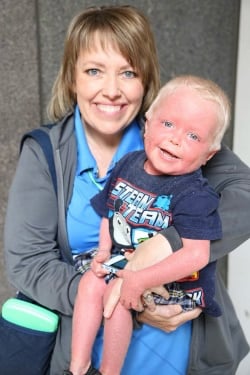
“The first time I ever really felt maternal toward my baby was the day when I could finally turn my back on the bright lights of the neonatal ward, cuddle her on a mountain of pillows and nurse. At last, I felt like she needed me and I was giving her something neither the specialists nor the machines could provide.”
– FIRST Member Camilla Strickler
Say Yes to Breast Feeding
A baby born with a collodion membrane is often capable of breast feeding. In fact, the area around your baby’s mouth is often the first place the membrane begins to shed. If your baby is in an isolette, which is common while the collodion membrane is shedding, don’t feel intimidated. Cream your baby up and put him or her to the breast. If you and your baby have difficulty getting a good latch, don’t give up. Patience is important, for nursing comes naturally only to a lucky few; most moms and babies have to work at it for a while. Ask an experienced nurse for help, and if you continue to have trouble, consider seeking the help of a lactation specialist. Most hospitals will have one on staff who can help you, and if not, your doctor or nurse can recommend one. You can also contact your local LaLeche League.
“The first time I held my baby for skin-on-skin therapy was at the NICU. He immediately started to make his way to my breast. Me, my husband, and the nurses all started to squeal with delight at his wonderful instinct to latch.“ – FIRST Member Camilla Strickler
Also, many premature babies and many collodion babies don’t have fully developed mouth muscles. A lactation specialist can offer strategies for this, like a nipple guard for example.
Other Good Options
Millions of healthy babies have been raised with the bottle, and yours will do just fine. Many times breast feeding and bottle feeding with an enriched formula with extra calories and iron is recommended. However, consult your physician about nutrition supplements, such as iron, that may be helpful.