Keratitis Ichthyosis Deafness
Rare genetic multi-system disorder characterized by defects of the corneas (keratitis), red rough thickened plaques of skin, and sensorineural deafness or severe hearing impairment.
What Is Keratitis Ichthyosis Deafness (KID)?
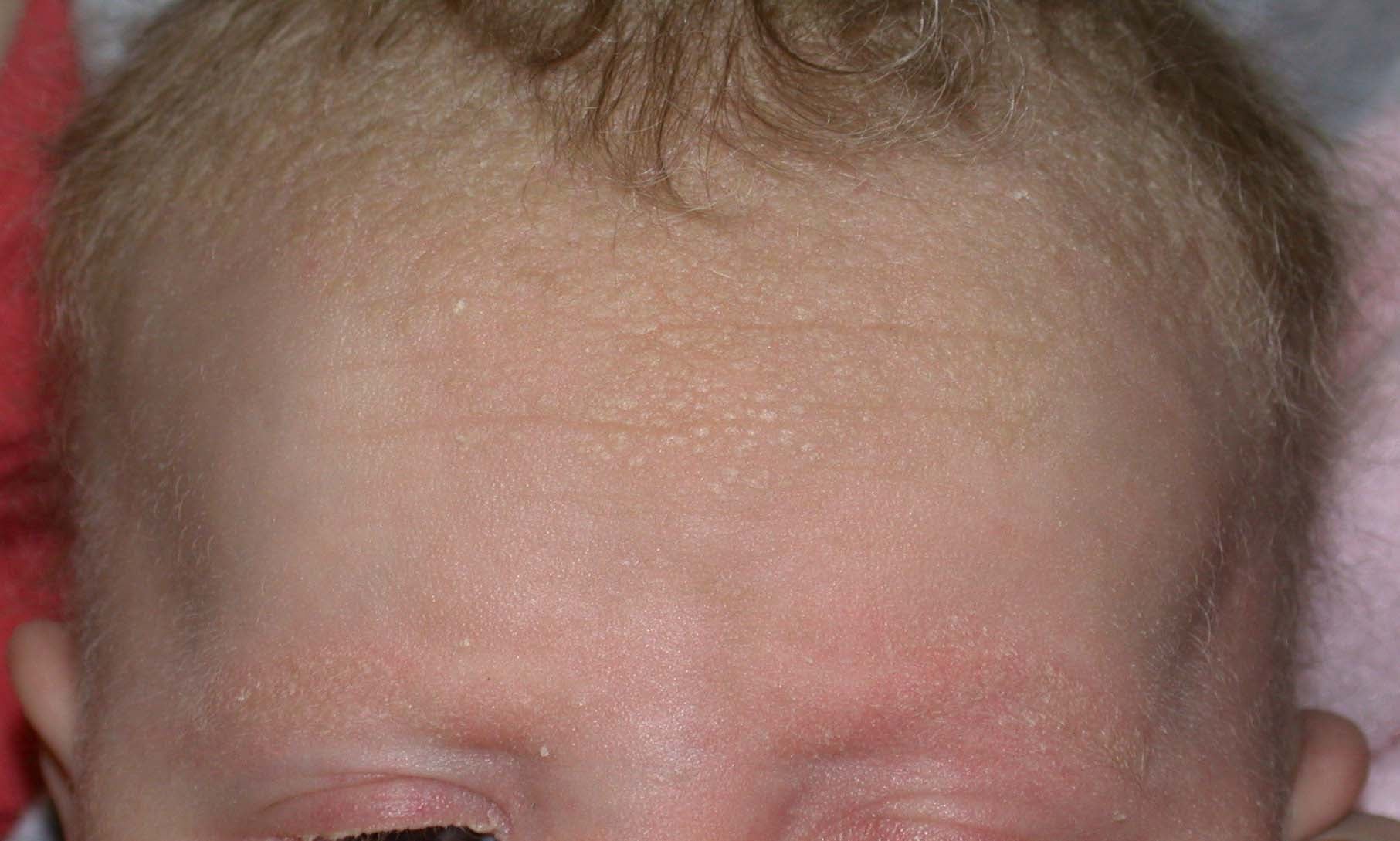
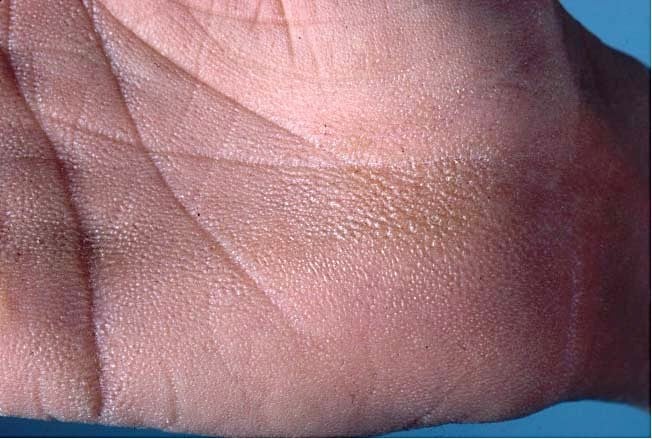
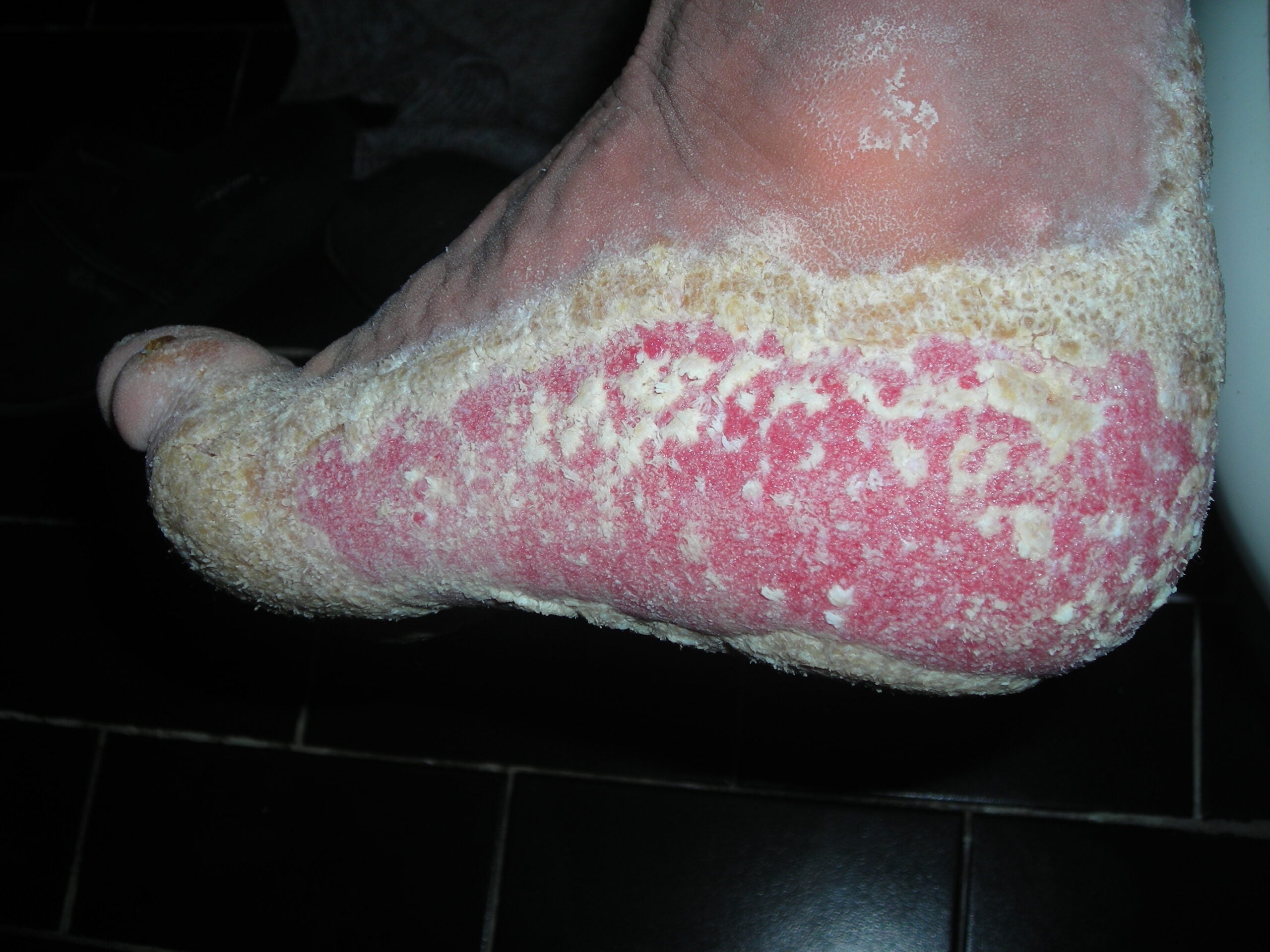
KID syndrome, first described in 1915, is a rare genetic multi-system disorder. Only about a hundred cases have been published. It is characterized by defects of the surface of the corneas (keratitis), red, rough thickened plaques of skin (erythrokeratoderma) and sensorineural deafness or severe hearing impairment. The skin on the palms of the hands and soles of the feet and the nails may be affected. KID syndrome belongs to a group of skin disorders marked by dry, scaly skin known as the ichthyoses. KID syndrome is inherited as an autosomal dominant trait.
Longterm Course
Often begins as congenital ichthyosiform erythroderma; usually improves during the first year of life leaving the characteristic findings described above; bacterial and fungal infections of the skin appear to be more common than normal, as do skin and mucous membrane cancers
Key Findings
- Skin
Sharply outlined and irregularly shaped red plaques with accuminate scale; face more commonly involved than extremities or trunk; generalized, mild erythema and fine scale in some individuals; spiny, keratotic thickening of the palms in some - Hair
Follicular plugging and generalized sparse or absent hair (common) - Nails
Small, malformed nails (common)
Associated Findings
- Eyes
Progressive inflammation and thickening of the cornea (keratitis) - Ears
Non-progressive hearing loss
Clinical Resources
- Clinicians seeking to confirm a diagnosis should visit the Edvyce portal to submit a case to experts in ichthyosis.
- Learn more about FIRST’s Resources for individuals and families affected by Ichthyosis
- Information about current clinical trials and research studies can be found here.

What are the Signs & Symptoms?
Based on a review of many articles in the medical literature, it appears that all cases of KID syndrome have skin findings, which include red and rough, thickened plaques that are sometimes scaling, as well as sensorineural deafness or severe hearing impairment. In addition, 95% of patients developed eye findings, predominantly keratitis (inflammation of the cornea), which may manifest with photophobia (the eyes are very sensitive to light). A few percent of patients had only recurrent or chronic conjunctivitis (inflammation of the mucous membrane of the eye). Sparse hair or alopecia (baldness) is also quite common. The skin of the palms and soles is affected in about 95% of all patients, while 77% have absent or dystrophic (abnormal) nails. There is a whole spectrum of other associated abnormalities, including recurrent infections, abnormal teeth, reduced sweating, growth or mental delay, which may occur in some but not many patients. The clinical presentation may vary greatly between patients and may change over time. Due to the involvement of several organ systems and the potential impairment of hearing, speech, and sight, patients usually require multidisciplinary treatment.
How is it Diagnosed?
KID syndrome is a genetic disorder and can be transmitted from a parent to a child in an autosomal dominant fashion. That means that each individual affected with the disease would have one abnormal and one normal copy of the disease gene. When, by chance, the abnormal gene copy is passed on to the offspring, the child will be affected. When the normal gene copy is transmitted, the child will be unaffected. The risk for an individual with KID syndrome to have an affected child is 50% for each pregnancy. Nevertheless, nine out of ten patients carry a new, spontaneously occurring mutation that is not present in either parent.
The research laboratory of Dr. G. Richard at the Department of Dermatology and Cutaneous Biology, Thomas Jefferson University, Philadelphia, PA discovered the gene whose mutations cause KID syndrome. It is called gap junction protein beta 2 (GJB2) and located on the long arm of human chromosome 13. This gene encodes the structural protein ‘connexin-26’ (Cx26), which forms gap junction channels that connect neighboring cells and permit the exchange of small molecules and ions. To date is known that about 80% of KID patients carry a common mutation replacing an aspartic acid residue at position 50 of Cx26 with an asparagine. The remainder of patients usually harbors unique mutations. It is thought that the protein made from the abnormal gene copy interferes with the assembly of gap junctions and the function of normal Cx26 in a so-called ‘dominant negative’ manner. Hence the direct cell-cell communication in the skin and other tissues, such as cornea and inner ear, might be impaired. Nevertheless, the exact pathomechanisms leading to KID syndrome are still not fully understood and are subject of current and future research.
Doctors frequently use genetic testing to help define which ichthyosis a person actually has. This may help them to treat and manage the patient. Another reason to have a genetic test is if you or a family member wants to have children. Genetic testing, which would ideally be performed first on the person with ichthyosis, is often helpful in determining a person’s, and their relative’s, chances to have a baby with ichthyosis. Genetic testing may be recommended if the inheritance pattern is unclear or if you or a family member is interested in reproductive options such as genetic diagnosis before implantation or prenatal diagnosis.
Results of genetic tests, even when they identify a specific mutation, can rarely tell you how mild or how severe a condition will be in any particular individual. There may be a general presentation in a family or consistent findings for a particular diagnosis, but it’s important to know that every individual is different. The result of a genetic test may be “negative,” meaning no mutation was identified. This may help the doctor exclude certain diagnoses, although sometimes it can be unsatisfying to the patient. “Inconclusive” results occur occasionally, and this reflects the limitation in our knowledge and techniques for doing the test. But we can be optimistic about understanding more in the future, as science moves quickly and new discoveries are being made all the time. You can participate in research studies and also receive genetic testing through the National Ichthyosis Registry at Yale University or for more information about genetic tests performed you can visit GeneDx, www.genedx.com.
The research laboratory of Dr. G. Richard at the Department of Dermatology and Cutaneous Biology, Thomas Jefferson University, Philadelphia, PA discovered the gene whose mutations cause KID syndrome. It is called gap junction protein beta 2 (GJB2) and located on the long arm of human chromosome 13. This gene encodes the structural protein ‘connexin-26’ (Cx26), which forms gap junction channels that connect neighboring cells and permit the exchange of small molecules and ions. To date is known that about 80% of KID patients carry a common mutation replacing an aspartic acid residue at position 50 of Cx26 with an asparagine. The remainder of patients usually harbors unique mutations. It is thought that the protein made from the abnormal gene copy interferes with the assembly of gap junctions and the function of normal Cx26 in a so-called ‘dominant negative’ manner. Hence the direct cell-cell communication in the skin and other tissues, such as cornea and inner ear, might be impaired. Nevertheless, the exact pathomechanisms leading to KID syndrome are still not fully understood and are subject of current and future research.
Doctors frequently use genetic testing to help define which ichthyosis a person actually has. This may help them to treat and manage the patient. Another reason to have a genetic test is if you or a family member wants to have children. Genetic testing, which would ideally be performed first on the person with ichthyosis, is often helpful in determining a person’s, and their relative’s, chances to have a baby with ichthyosis. Genetic testing may be recommended if the inheritance pattern is unclear or if you or a family member is interested in reproductive options such as genetic diagnosis before implantation or prenatal diagnosis.
Results of genetic tests, even when they identify a specific mutation, can rarely tell you how mild or how severe a condition will be in any particular individual. There may be a general presentation in a family or consistent findings for a particular diagnosis, but it’s important to know that every individual is different. The result of a genetic test may be “negative,” meaning no mutation was identified. This may help the doctor exclude certain diagnoses, although sometimes it can be unsatisfying to the patient. “Inconclusive” results occur occasionally, and this reflects the limitation in our knowledge and techniques for doing the test. But we can be optimistic about understanding more in the future, as science moves quickly and new discoveries are being made all the time. You can participate in research studies and also receive genetic testing through the National Ichthyosis Registry at Yale University or for more information about genetic tests performed you can visit GeneDx, www.genedx.com.
What is the Treatment?
Individuals with KID syndrome usually require multidisciplinary treatment due to the involvement of several organ systems and the potential impairment of hearing, speech, and sight.
The skin symptoms of KID syndrome can be treated by applying skin softening emollients. This can be particularly effective after bathing while the skin is still moist. Lotions containing alpha-hydroxy acids can be an effective treatment for scaling skin. Cholesterol or ceramide containing emollients may also improve the scaling.
Genetic counseling may be of benefit for affected individuals and their families.
The skin symptoms of KID syndrome can be treated by applying skin softening emollients. This can be particularly effective after bathing while the skin is still moist. Lotions containing alpha-hydroxy acids can be an effective treatment for scaling skin. Cholesterol or ceramide containing emollients may also improve the scaling.
Genetic counseling may be of benefit for affected individuals and their families.
References
- Caceres-Rios H, Tamayo-Sanchez L, Duran-Mckinster C, de la Luz Orozco M, Ruiz-Maldonado R: Keratitis, ichthyosis, and deafness (KID syndrome): review of the literature and proposal of a new terminology. Pediatr Dermatol 13:105-113, 1996
- Richard G, Rouan F, Willoughby CE, et al.: Missense mutations in GJB2 encoding connexin-26 cause the ectodermal dysplasia keratitis-ichthyosis-deafness syndrome. Am J Hum Genet 70:1341-1348, 2002
- Szymko-Bennett YM, Russell LJ, Bale SJ, Griffith AJ: Auditory manifestations of Keratitis-Ichthyosis-Deafness (KID) syndrome. Laryngoscope 112:272-280, 2002
- van Steensel MA, van Geel M, Nahuys M, Smitt JH, Steijlen PM: A novel connexin 26 mutation in a patient diagnosed with keratitis- ichthyosis-deafness syndrome. J Invest Dermatol 118:724-727, 2002
- Tuppurainen K, Fraki, J, Karjalainen S, Paljarvi L, Suhonen R, Ryynanen M: The KID syndrome in Finland. Acta Opththalmol (Copenh) 66:692-698, 1988
Types of Ichthyosis
- Congenital Ichthyosiform Erythroderma (CIE)
- Lamellar Ichthyosis
- Collodion Baby
- Darier Disease
- Epidermal Nevus
- Epidermolytic Ichthyosis
- Erythrokeratodermia Variabilis
- Erythrokeratodermia Cardiomyopathy Syndrome
- Harlequin Ichthyosis
- Ichthyosis Vulgaris
- Ichthyosis with Confetti
- Keratitis-Ichthyosis-Deafness (KID)
- Netherton Syndrome
- Pachyonychia Congenita
- Palmoplantar Keratodermas
- Sjögren-Larsson Syndrome
- X-Linked Ichthyosis
- Chanarin Dorfman Syndrome
- CHILD Syndrome
- Conradi-Hünermann
- Ichthyosis Hystrix with Deafness (HID) Syndrome
- Ichthyosis Hystrix Curth-Macklin
- Refsum Disease
- Trichothiodystrophy
Phenotype Names
Keratitis ichthyosis deafness (KID), keratitis, ichthyosis and deafness
EDD Names
GJB2-sEDD (connexin 26)
GJB6-sEDD (connexin 30; rare cases)
OMIM
Inheritance
Autosomal dominant
Incidence
Very rare
Diagnostic Tests
none
Age of First Appearance
Birth
Abnormal Genes
GJB2, encoding connexin 26
Primary Symptom Photos