Epidermolytic Ichthyosis
Skin condition causing fluid-filled blisters, reddened skin, and thickening of the outer layer, often present at birth or developing in infancy.
What Is Epidermolytic Ichthyosis?
Epidermolytic ichthyosis (EI) is a skin condition that often causes fluid-filled blisters on the skin and reddened skin and thickening of the outer layer of the skin. It is usually present at birth, or it develops in infancy.
Longterm Course
Blistering is usually most severe at birth and improves significantly with age; scaling is lifelong; infection of blisters and blisters caused by infection is common.
Key Findings
- Skin
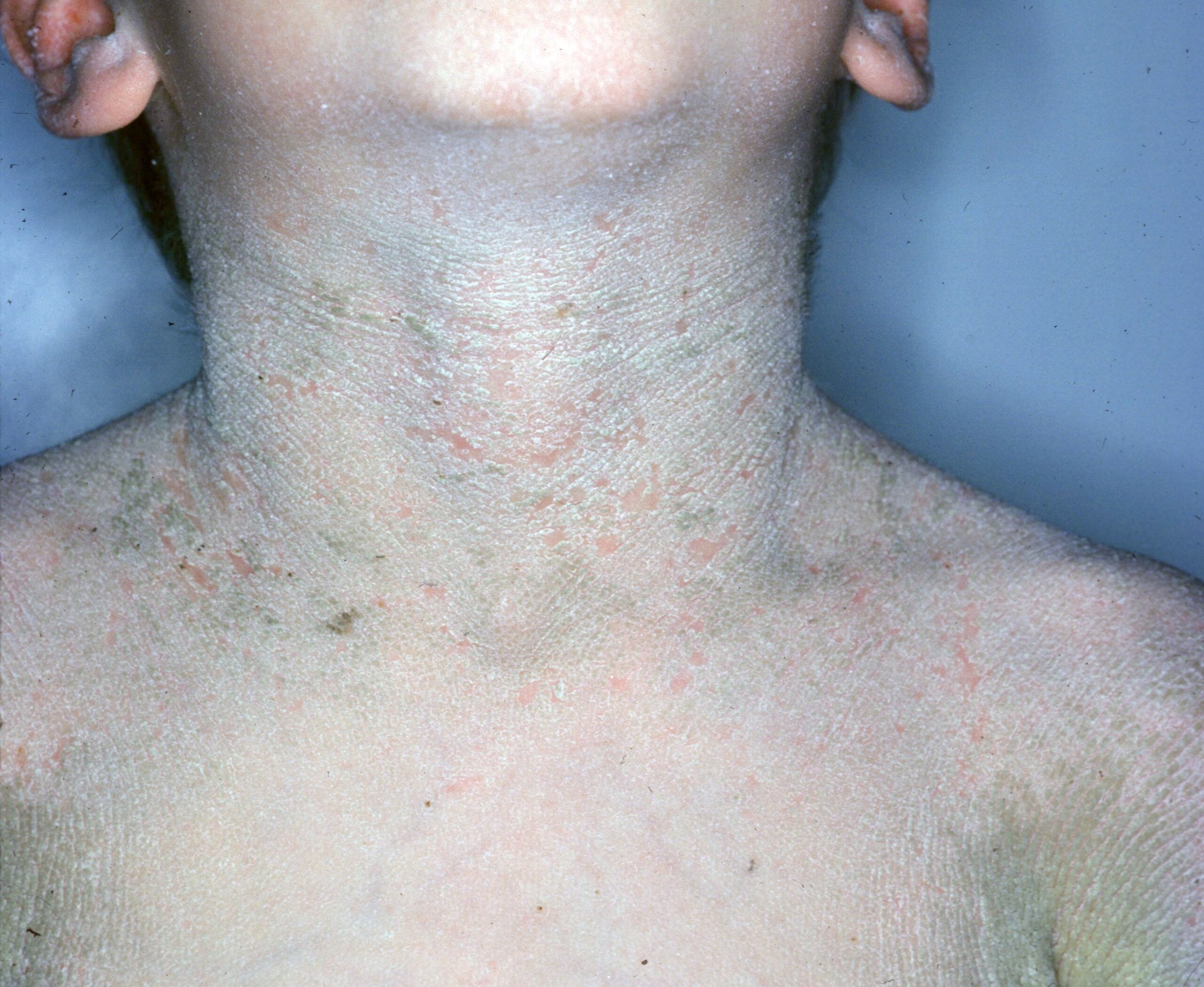
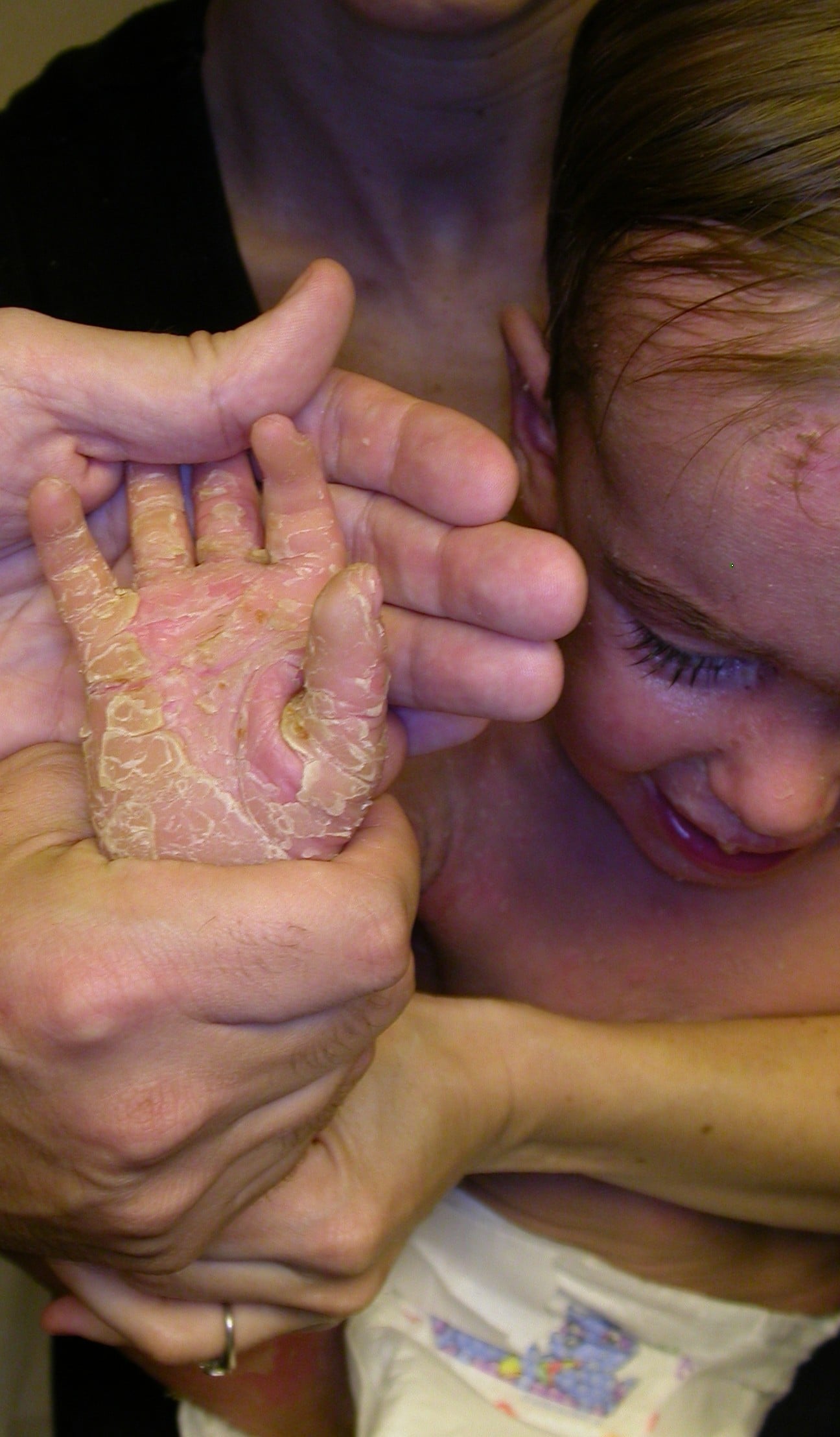
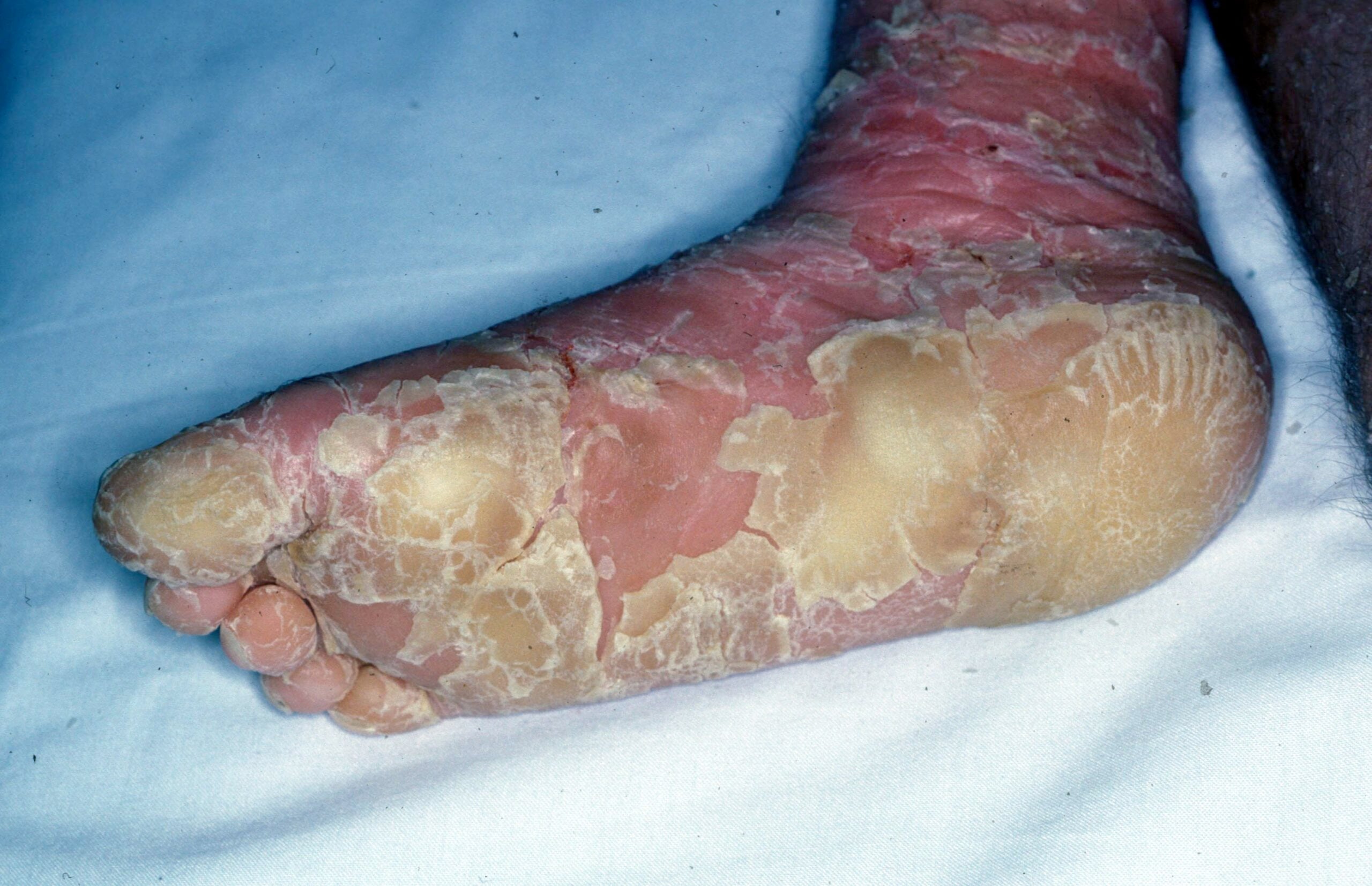
Generalized flat, polygonal, dark, often large (>1cm) scales; palms and soles usually thickened; variable redness under scales; ectropion usually present; may have clinical overlap with ARCI-CIE type due to shared gene mutations. - Hair
No shaft abnormalities; alopecia has been reported in some cases. - Nail
Usually normal; may become dystrophic.
Associated Findings
- Usually none
Clinical Resources
- Clinicians seeking to confirm a diagnosis should visit the Edvyce portal to submit a case to experts in ichthyosis.
- Learn more about FIRST’s Resources for individuals and families affected by Ichthyosis
- Information about current clinical trials and research studies can be found here.

What Causes Epidermolytic Ichthyosis?
EI is caused by a change in one of two genes called KRT1 and KRT10. These genes provide instructions for making proteins that in turn produce the cells that make up the skin, hair, and nails. About half of people with EI inherit the altered gene that causes the condition from a parent. The other half are born with the altered gene but don’t inherit it from a parent; this is called a spontaneous genetic mutation.
How Common is it?
The condition affects males, females, and people of all races about equally.
Other names you might hear it called:
Other names you might hear it called:
- Bullous congenital ichthyosiform erythroderma (BCIE)
- Bullous erythroderma ichthyosiformis congenita of Brocq
- Bullous ichthyosiform erythroderma (BIE)
- Bullous ichthyosiform erythroderma congenita
- Congenital bullous ichthyosiform erythroderma
- Epidermolytic hyperkeratosis (EHK)
What are the Signs & Symptoms?
Infants with EI are born with skin that is red and blistering and patches where the outer layer of the skin has peeled away. Normally, the skin’s outer layer acts as a barrier, helping to maintain body temperature, keep the right amount of moisture in, and guard against infection. Without this protection, babies with EI may
- Lose too much water and other fluids that the body needs to work normally
- Have too much or too little of substances like sodium that the body needs
- Easily get too cold or too warm
- Be prone to infections in the skin or elsewhere in the body
Normal skin is always changing, repairing itself, and regenerating. Our bodies normally shed close to a million skin cells every day and replace them with new ones. In people with EI, however, new skin cells are created much more quickly than they are shed. Because the outer layer of the skin is irritated or missing, the body responds by producing extra skin cells that that eventually form thick, cardboard-like layers, or scales, on the skin surface.
Older Children and Adults with EI May Have
- Dry eyes
- Difficulty sweating because thick layers of skin clog the sweat glands
- Fragile skin that cracks easily and frequently becomes infected
- Skin wounds caused by scratching to try to relieve itchiness
- Issues with hearing caused by buildup of skin scales in the ears
- Thin or fragile hair due to buildup of skin scales that block the hair follicles, openings on the surface of the scalp that hair grows through
- Thickened skin on the palms of the hands and soles of the feet
What to Expect
- Sometimes the skin can get very dry, crack, and hurt a lot.
- Developing and sticking with a daily routine aimed at keeping the skin moist is important. Doing so helps to remove dead and thickened areas of skin and to control skin itching and cracking. This routine usually includes taking frequent baths and then applying moisturizers or other skin protectants right away to lock moisture into the skin. Tools like pumice stone and skin products that contain lanolin, urea, propylene glycol, or alpha hydroxy acids may be helpful.
- It can take time for a new skin cream or other treatment to work. You may need to use a skin care product for at least two or three weeks before deciding whether it’s effective.
- Every person with EI is different. Even when people share the same disease subtype or the same genetic mutation – or are members of the same family – each individual may have different symptoms and will need to find their own path to managing the condition in the way that works best for them.
- People may offer advice about skin care products and coping strategies that they have found helpful. Keep in mind that what has worked for someone else may or may not work for you or your child. You may need to try a variety of skin care products and approaches before finding the one that has the best results for you or your child.
- Bathing with an antiseptic skin cleanser can kill bacteria that get trapped in the cracks or creases in thick skin scales. Adding a couple of teaspoons of chlorine bleach to each gallon of bath water may also help.
- Young children with EI may need supplemental feedings to ensure that they consume enough calories to support their growth. It can be helpful to conosult a nutritionist who can help you develop a diet plan that meets your child’s developmental needs.
- Children with EI often fail early hearing tests. They should see an ear, nose, and throat specialist regularly to have skin buildup cleared from their ears.
- EI may affect more than your skin. Thick fingers and stiff knuckles can make it difficult to grip things with your hands, while stiff knees and ankles can limit walking. Living with a condition that is often very noticeable to other people can be upsetting, so be sure you are minding your mental health too.
- It can be difficult to explain EI to other people or to find the best skin care regimen to follow. Talking and sharing experiences with other people who have EI or other forms of ichthyosis can help you feel less alone.
What is the Treatment?
Infants with EI are cared for in high-humidity, temperature-controlled incubators and fed frequently. Nurses apply moisturizers and soft dressings, if needed, to the babies’ skin. Infants must be handled very gently to avoid irritating their fragile skin; wrapping them in 100% cotton blankets may help. After a few weeks in the neonatal intensive care unit, babies with EI can usually go home.
The Main Treatments for EI include
- Bathing or showering frequently using a mild, soap-free cleanser to soften the skin and remove layers of thickened skin
- Rubbing the skin lightly with a loofah, rough-textured sponge, or pumice stone to help remove thickened skin
- Applying moisturizers to the skin after bathing or showering and throughout the day to reduce skin dryness; be careful not to use perfumed lotions
Treatment with antibiotics may be needed when a skin infection is suspected.
EI may also be treated with drugs called retinoids. These drugs can reduce skin scaling, but if they are discontinued the scales come back. Long-term use of retinoids can cause serious adverse effects, so doctors prescribe them only when symptoms are very severe.
Things to Keep in Mind
- EI is a chronic condition that needs lifelong, daily, meticulous care.
- EI is not contagious. No one can catch it by touching or being close to you or to your child with EI.
- Because EI is rare, many doctors – including dermatologists (specialists in treating skin conditions) –have never seen a patient with any type of ichthyosis and know little about the condition.
- Both cold and hot weather present challenges for people with EI. If you live in a cold or hot climate, or plan to travel to areas that have extreme temperatures, talk with your care team and make a plan.
- People (some well meaning, others less so) may stare at you, or at your child with EI, and ask questions like “What’s wrong with your skin/your child?” or “Does it hurt?”. Other children may tease or bully your child with EI because of their appearance.
- Explaining to people that you, or your child who has EI, were born with the condition may help them understand that you’re not sick and that you live with the condition every day.
- When you have EI, your skin may look different from other people’s, but you can still do most things that other people do.
- You are not responsible for other people’s reactions to your or your child’s appearance. Your skin condition does not define who you are.
- Do your best to treat your child with EI in the same way as unaffected children in the family, while allowing for the fact that your child with EI needs a special skin care regimen and must take certain precautions (e.g., in hot or cold weather).
- For example, hold them to similar expectations and encourage them to follow their dreams and ambitions just as you do your other children. Often, kids learn that they can be a teacher, for example, but that perhaps a job in which they would be out in the blazing sun and heat all day wouldn’t be a good choice for them.
- Reinforce in your child with EI that their skin condition does not define who they are or what they can achieve in their lives.
Questions to Ask
- How is EI different from other types of ichthyosis?
- Can ichthyosis spread?
- What can irritate or make the condition worse?
- How can I best prevent infection?
- Does drinking lots of water and getting good nutrition help?
- What are the best treatments or ways to improve the skin? Are certain skin lotions or creams better than others?
- Can physical therapy help with the tightness and difficulty grasping things?
- Can I exercise and what are the best activities to do? What about swimming?
- Are there activities I should avoid?
- Should I keep a journal to track my skin care? What characteristics about my skin, eyes, and/or hair growth should I keep track of?
- When should I call if my skin is looking or feeling worse?
- Is there an ichthyosis clinic that I can be referred to?
- How do I cope with the emotional side of having ichthyosis and with what my skin looks like?
- Are there support groups I can join?
- How can I best protect my child’s skin, but also make sure they don’t feel overwhelmed by the condition or left out by their peers?
- To learn more about ichthyosis research or find out how you can partner with FIRST members on a research study, visit the current clinical trials and research studies section on FIRST’s website.
- Visit EI Cure Project for additional information on epidermolytic ichthyosis
- Visit EI Cure Project for additional information on the care of newborns and infants with epidermolytic ichthyosis
Pertinent Research
Sources
- Craiglow BG. Epidermolytic Ichthyosis (Epidermolytic Hyperkeratosis or Bullous Congenital Ichthyosiform Erythroderma. Updated 2021 Oct 8. https://emedicine.medscape.com/article/1112403
- Craiglow BG. Ichthyosis in the Newborn. Semin Perinatol. 2013 Feb; 37(1): 26–31.
doi: 10.1053/j.semperi.2012.11.001 - Dahl AA. Ichthyosis Treatment & Management. 2018 Aug 28. https://emedicine.medscape.com/article/1198130- treatment#d2
- FIRST. A Handbook for Parents & Caregivers of Children with Ichthyosis.
- HowStuffWorks.com. How Many Skin Cells Do We Shed Every Day? https://health.howstuffworks.com/skin-care/information/anatomy/shed-skin-cells.htm
- MedlinePlus Genetics. Epidermolytic hyperkeratosis. https://medlineplus.gov/genetics/condition/epidermolytic-hyperkeratosis/
- NIAMS/NIH. Ichthyosis: Diagnosis, Treatment, and Steps to Take. https://www.niams.nih.gov/health-topics/ichthyosis/diagnosis-treatment-and-steps-to-take
Types of Ichthyosis
- Congenital Ichthyosiform Erythroderma (CIE)
- Lamellar Ichthyosis
- Collodion Baby
- Darier Disease
- Epidermal Nevus
- Epidermolytic Ichthyosis
- Erythrokeratodermia Variabilis
- Erythrokeratodermia Cardiomyopathy Syndrome
- Harlequin Ichthyosis
- Ichthyosis Vulgaris
- Ichthyosis with Confetti
- Keratitis-Ichthyosis-Deafness (KID)
- Netherton Syndrome
- Pachyonychia Congenita
- Palmoplantar Keratodermas
- Sjögren-Larsson Syndrome
- X-Linked Ichthyosis
- Chanarin Dorfman Syndrome
- CHILD Syndrome
- Conradi-Hünermann
- Ichthyosis Hystrix with Deafness (HID) Syndrome
- Ichthyosis Hystrix Curth-Macklin
- Refsum Disease
- Trichothiodystrophy
Phenotype Names
Epidermolytic ichthyosis, ichthyosis hystrix; ichthyosis bullosa of Siemens; b-CIE; bullous congenital ichthyosiform erythroderma; (formerly epidermolytic hyperkeratosis (EHK)
EDD Names
KRT1-nEDD-epidermolytic
KRT10-nEDD-epidermolytic
KRT10-nEDD-nonepidermolytic (rare variant)
KRT2-nEDD (formerly superficial epidermolytic ichthyosis)
OMIM
Inheritance
Autosomal dominant (50% new mutations)
Incidence
Rare (1:300,000)
Diagnostic Tests
Skin biopsy shows characteristic changes; analysis of cellular DNA
Age of First Appearance
Birth
Abnormal Gene
Keratins K1, K10 or K2
Primary Symptom Photos