Darier Disease
Rare genetic disorder characterized by persistent, greasy, scaly bumps occurring primarily in seborrheic areas, caused by disrupted calcium transport affecting bonds between skin cells.
What Is Darier Disease?
Darier disease is a rare genetic disorder characterized primarily by skin changes. The onset of skin changes usually occurs in adolescence. The severity of the disease may fluctuate over time, but it is chronic and lifelong.
In normal skin, the skin cells are held together like bricks cemented in a wall. In this condition, the skin cells are not held together properly and the skin may become scaly or bumpy or form blisters
Longterm Course
Spontaneous relapses and remissions are common, but generally tends to worsen over time; heat and sun exposure are known causes of exacerbations; superficial bacterial infections are common and herpes simplex virus infections can become widespread
Key Findings
- Skin
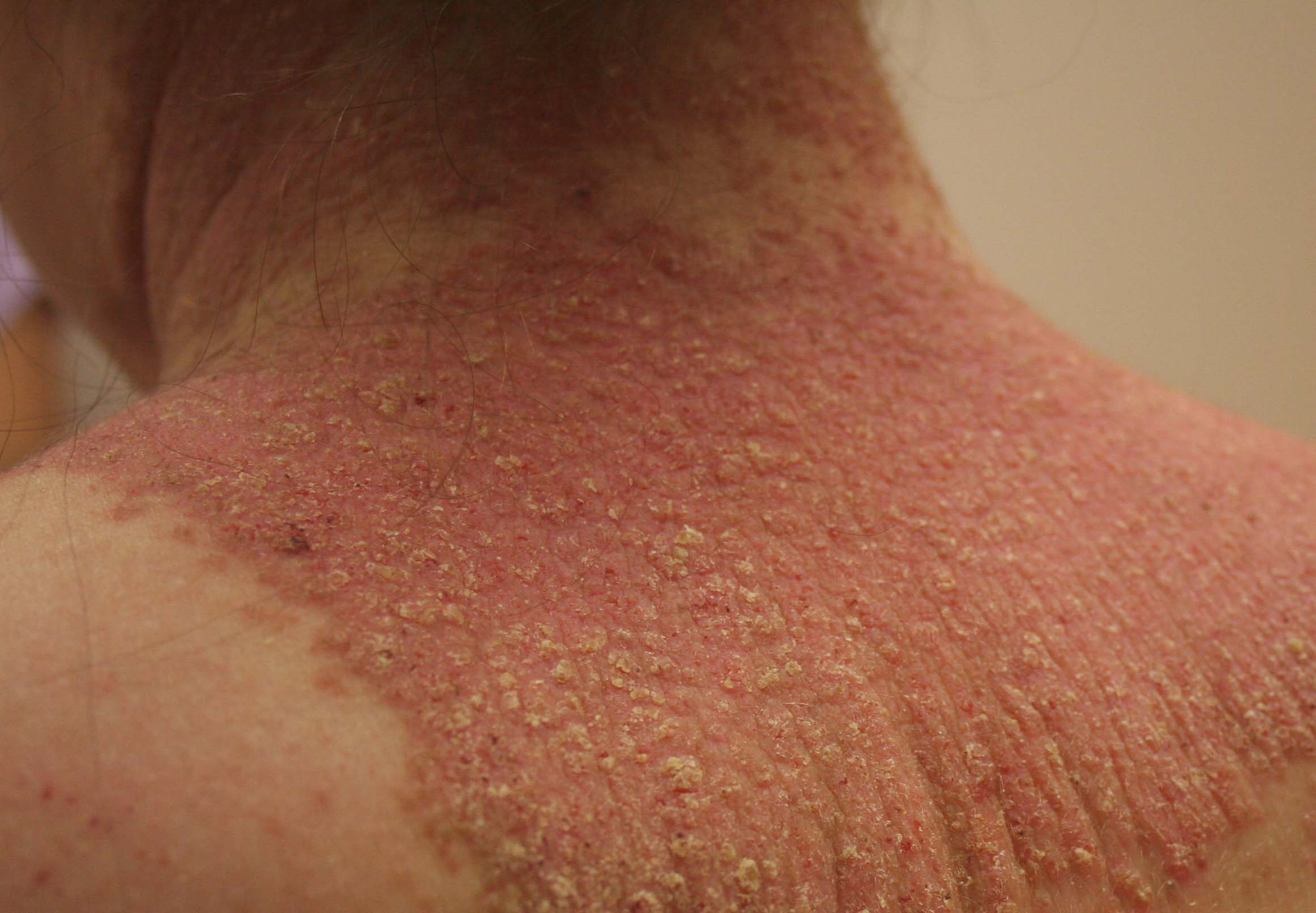
Small warty papules most commonly on scalp, face, chest, groin, lower legs; papules often coalesce to form large plaques that appear to be surrounded by apparently normal-looking skin; can be itchy, weepy or raw; some individuals have characteristic smooth papules on palms or backs of hands or keratotic pits on palms; some develop small hemorrhages on hands - Hair
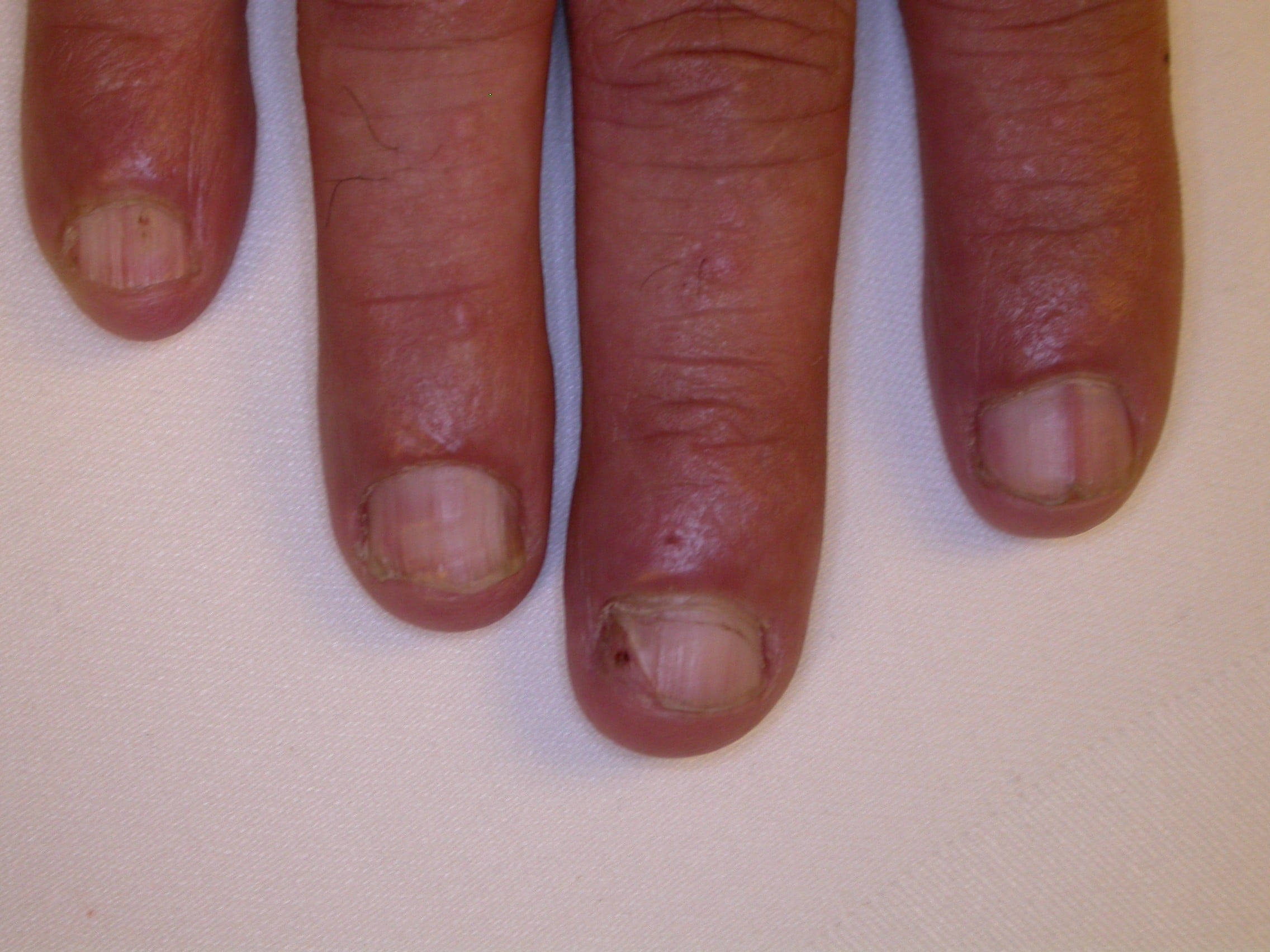
Red or white longitudinal bands often extend to a notch at end of the nail - Mucous Membranes
Smooth papules inside mouth or anogenital mucosa
Associated Findings
- Usually none
Clinical Resources
- Clinicians seeking to confirm a diagnosis should visit the Edvyce portal to submit a case to experts in ichthyosis.
- Learn more about FIRST’s Resources for individuals and families affected by Ichthyosis
- Information about current clinical trials and research studies can be found here.
What are the Signs & Symptoms?
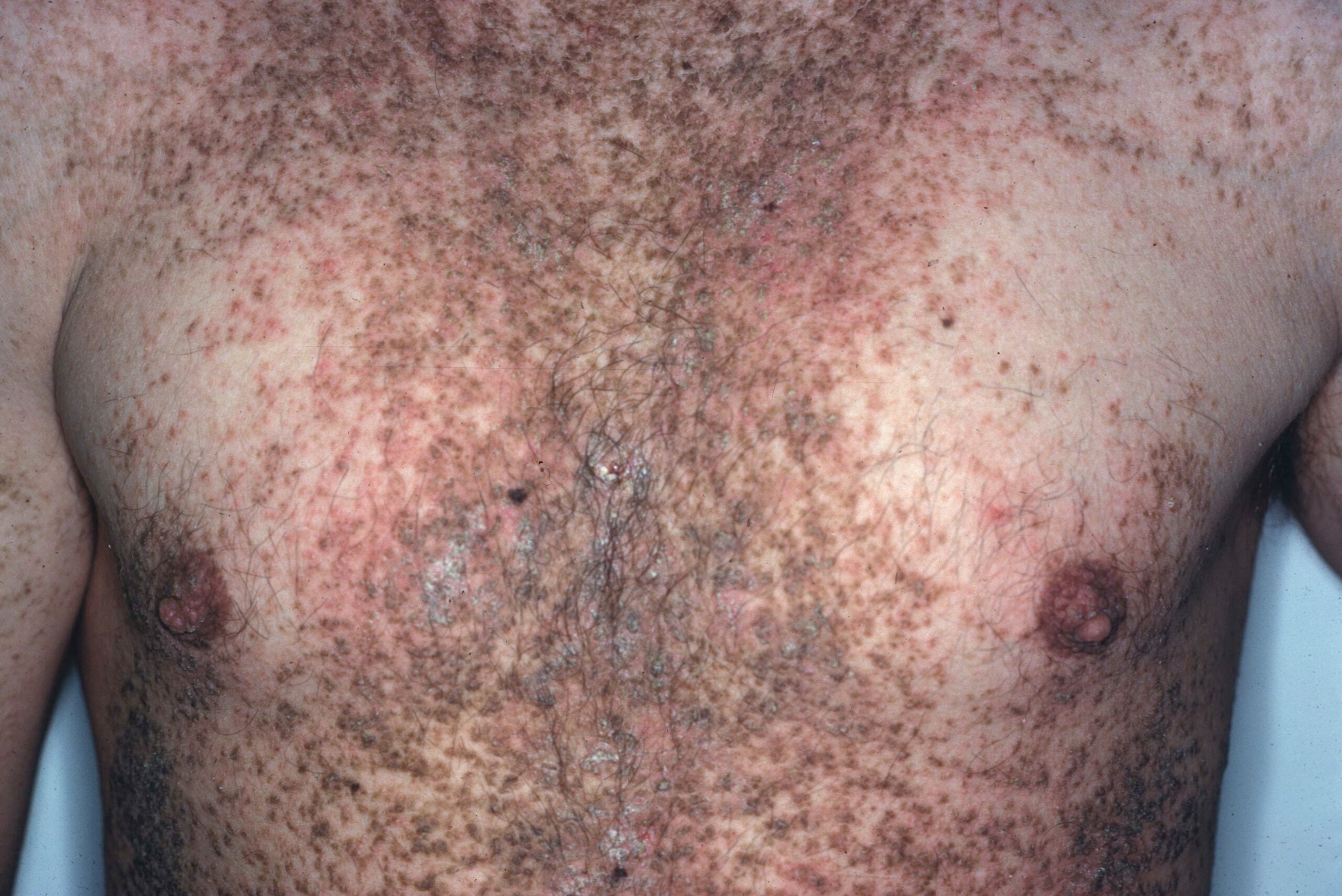
The skin changes are characterized by persistent, greasy, scaly bumps, which tend to occur in the seborrheic (oily or sebum-producing) areas of the face (edges of the scalp, forehead, ears, and sides of the nose), neck and central chest and back. The folds of the skin around the joints and the skin under the breasts and between the buttocks are also commonly affected. The skin lesions may feel firm and rough, like sandpaper, and may be skin-colored, yellow brown, or brown in color. If the skin lesions grow together they may form larger warty lesions, which can produce a foul odor within the skin folds. Itching is also a common problem.
Atypical characteristics of the skin lesions are common. Some individuals have flat, freckle-like lesions, while others may have very large, raised, warty lesions. Some people develop a blistered pattern of lesions or a linear patterned rash.
The hands and fingernails are also usually affected. The nails tend to be fragile, split easily and look as if they have been bitten, or appear dirty. There may be long red or white lines running the length of the nails. Pits or small corns occur on the palms of the hands and, less commonly, on the soles of the feet. White pitted lesions may also affect the mucous membranes of the mouth.
A number of things seem to make the condition worse, particularly heat, humidity, stress and sun exposure. Wearing wool or nylon clothing that increases sweating or irritates the skin may worsen symptoms. People with Darier disease may be more susceptible to bacterial skin infection and herpes simplex (the cold sore virus) infection. Bacterial and viral infection can cause flares.
Atypical characteristics of the skin lesions are common. Some individuals have flat, freckle-like lesions, while others may have very large, raised, warty lesions. Some people develop a blistered pattern of lesions or a linear patterned rash.
The hands and fingernails are also usually affected. The nails tend to be fragile, split easily and look as if they have been bitten, or appear dirty. There may be long red or white lines running the length of the nails. Pits or small corns occur on the palms of the hands and, less commonly, on the soles of the feet. White pitted lesions may also affect the mucous membranes of the mouth.
A number of things seem to make the condition worse, particularly heat, humidity, stress and sun exposure. Wearing wool or nylon clothing that increases sweating or irritates the skin may worsen symptoms. People with Darier disease may be more susceptible to bacterial skin infection and herpes simplex (the cold sore virus) infection. Bacterial and viral infection can cause flares.
How is it Diagnosed?
Darier disease is inherited in an autosomal dominant pattern, which means that a single gene passed from one parent causes the condition. The chance of a child inheriting the abnormal gene if one parent is affected is 50%, but not all people with the abnormal gene will develop symptoms of the disease.
The genetic cause of Darier disease has been traced to mutations in the ATP2A2 gene, which encodes a particular type of pump, which transports calcium ions across cells. This disruption of calcium transport affects the bond between skin cells. Genetic testing for ATP2A2 and skin biopsy can help to definitively diagnose Darier disease. The histology seen on the skin biopsy is focal acantholytic dyskeratosis.
Doctors frequently use genetic testing to help define which ichthyosis a person actually has. This may help them to treat and manage the patient. Another reason to have a genetic test is if you or a family member wants to have children. Genetic testing, which would ideally be performed first on the person with ichthyosis, is often helpful in determining a person’s, and their relative’s, chances to have a baby with ichthyosis. Genetic testing may be recommended if the inheritance pattern is unclear or if you or a family member is interested in reproductive options such as genetic diagnosis before implantation or prenatal diagnosis.
Results of genetic tests, even when they identify a specific mutation, can rarely tell you how mild or how severe a condition will be in any particular individual. There may be a general presentation in a family or consistent findings for a particular diagnosis, but it’s important to know that every individual is different. The result of a genetic test may be “negative,” meaning no mutation was identified. This may help the doctor exclude certain diagnoses, although sometimes it can be unsatisfying to the patient. “Inconclusive” results occur occasionally, and this reflects the limitation in our knowledge and techniques for doing the test. But we can be optimistic about understanding more in the future, as science moves quickly and new discoveries are being made all the time. You can participate in research studies and also receive genetic testing through the National Ichthyosis Registry at Yale University or for more information about genetic tests performed you can visit GeneDx, www.genedx.com.
The genetic cause of Darier disease has been traced to mutations in the ATP2A2 gene, which encodes a particular type of pump, which transports calcium ions across cells. This disruption of calcium transport affects the bond between skin cells. Genetic testing for ATP2A2 and skin biopsy can help to definitively diagnose Darier disease. The histology seen on the skin biopsy is focal acantholytic dyskeratosis.
Doctors frequently use genetic testing to help define which ichthyosis a person actually has. This may help them to treat and manage the patient. Another reason to have a genetic test is if you or a family member wants to have children. Genetic testing, which would ideally be performed first on the person with ichthyosis, is often helpful in determining a person’s, and their relative’s, chances to have a baby with ichthyosis. Genetic testing may be recommended if the inheritance pattern is unclear or if you or a family member is interested in reproductive options such as genetic diagnosis before implantation or prenatal diagnosis.
Results of genetic tests, even when they identify a specific mutation, can rarely tell you how mild or how severe a condition will be in any particular individual. There may be a general presentation in a family or consistent findings for a particular diagnosis, but it’s important to know that every individual is different. The result of a genetic test may be “negative,” meaning no mutation was identified. This may help the doctor exclude certain diagnoses, although sometimes it can be unsatisfying to the patient. “Inconclusive” results occur occasionally, and this reflects the limitation in our knowledge and techniques for doing the test. But we can be optimistic about understanding more in the future, as science moves quickly and new discoveries are being made all the time. You can participate in research studies and also receive genetic testing through the National Ichthyosis Registry at Yale University or for more information about genetic tests performed you can visit GeneDx, www.genedx.com.
What is the Treatment?
Oral retinoids have been reported to be effective treatments for Darier disease. However, prolonged use of oral retinoids can cause significant side effects and individuals using these drugs need to be monitored closely by their physicians. Symptoms of the disease will return if the retinoid therapy is stopped.
Topical retinoids such as tazarotene, isotretinoin, and adapalene have been shown to be effective in some individuals. Tacrolimus ointment, a calcineurin inhibitor, has been helpful in moderating symptoms in some patients. Surgical treatments, including dermabrasion, carbon dioxide laser, and erbium YAG laser, may be effective in treating localized areas. Antibacterial washes, antiseptic creams, and oral antibiotics may help with odor and skin infections. Using high factor sunscreen, avoiding sun exposure, and wearing cotton clothing may help reduce flare-ups of the disease.
Topical retinoids such as tazarotene, isotretinoin, and adapalene have been shown to be effective in some individuals. Tacrolimus ointment, a calcineurin inhibitor, has been helpful in moderating symptoms in some patients. Surgical treatments, including dermabrasion, carbon dioxide laser, and erbium YAG laser, may be effective in treating localized areas. Antibacterial washes, antiseptic creams, and oral antibiotics may help with odor and skin infections. Using high factor sunscreen, avoiding sun exposure, and wearing cotton clothing may help reduce flare-ups of the disease.
Types of Ichthyosis
- Congenital Ichthyosiform Erythroderma (CIE)
- Lamellar Ichthyosis
- Collodion Baby
- Darier Disease
- Epidermal Nevus
- Epidermolytic Ichthyosis
- Erythrokeratodermia Variabilis
- Erythrokeratodermia Cardiomyopathy Syndrome
- Harlequin Ichthyosis
- Ichthyosis Vulgaris
- Ichthyosis with Confetti
- Keratitis-Ichthyosis-Deafness (KID)
- Netherton Syndrome
- Pachyonychia Congenita
- Palmoplantar Keratodermas
- Sjögren-Larsson Syndrome
- X-Linked Ichthyosis
- Chanarin Dorfman Syndrome
- CHILD Syndrome
- Conradi-Hünermann
- Ichthyosis Hystrix with Deafness (HID) Syndrome
- Ichthyosis Hystrix Curth-Macklin
- Refsum Disease
- Trichothiodystrophy
Phenotype Names
Darier disease, Darier-White disease; Keratosis Follicularis
EDD Name
ATP2A2-nEDD
OMIM
Inheritance
Autosomal dominant
Incidence
1:50,000
Diagnostic Tests
Skin biopsy shows characteristic changes; analysis of cellular DNA
Age of First Appearance
Usually second decade, sometimes later
Abnormal Genes
Calcium transporter gene ATP2A2
Primary Symptom Photos