Erythrokeratodermia Variabilis
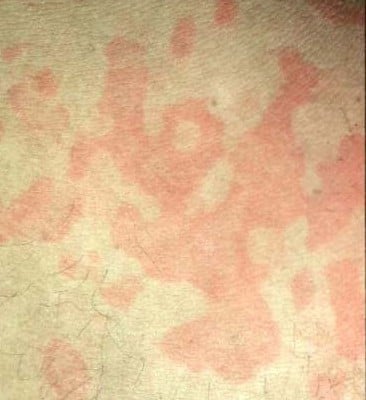
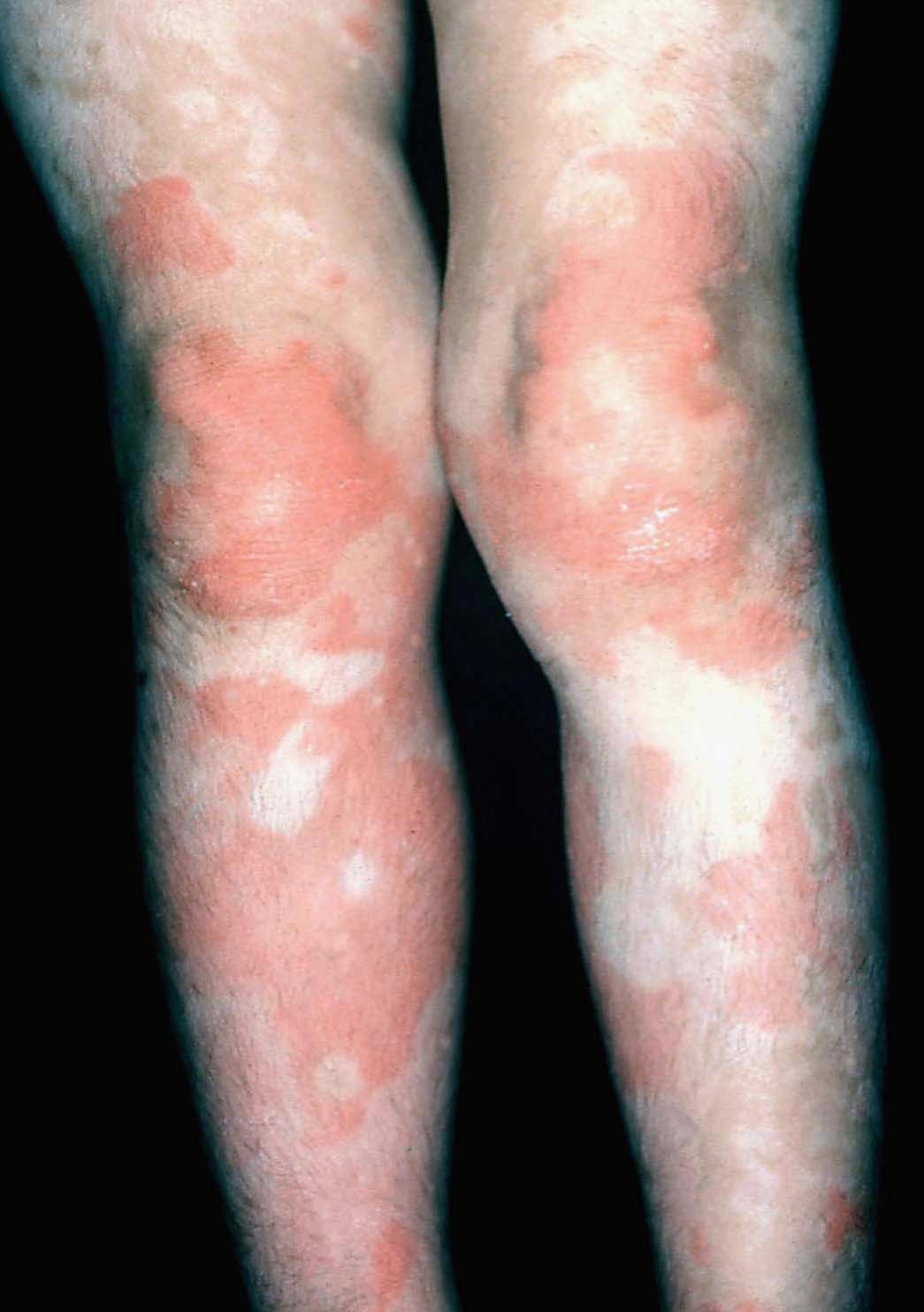
Very rare inherited disorder characterized by transient, figurate erythema (reddening) and hyperkeratosis (thickened skin) occurring independently.
What Is Erythrokeratodermia Variabilis?
Erythrokeratodermia variabilis (EKV) is a very rare inherited skin disorder of cornification associated with noninflammatory erythema. It is present at birth or becomes apparent in infancy.
Longterm Course
Scaly plaques change little over time; red patches vary in intensity, pattern and distribution and may be induced by environmental or emotional changes
Key Findings
- Skin
Discrete red, thickened plaques with tightly adherent, yellow-brown, small scales; may be localized or widespread but do not move; separate red patches without scale are transient
Associated Findings
- Neurologic
Progressive ataxia beginning in the fifth decade – only in the Giroux-Barbeau syndrome (which has the skin findings of EKV)
Clinical Resources
- Clinicians seeking to confirm a diagnosis should visit the Edvyce portal to submit a case to experts in ichthyosis.
- Learn more about FIRST’s Resources for individuals and families affected by Ichthyosis?
- Information about current clinical trials and research studies can be found here.
What are the Signs & Symptoms?
Although its signs and symptoms vary, the condition is characterized by two major features. The hallmark of erythrokeratodermia variabilis (EKV) is the seemingly independent occurrence of transient, figurate erythema (reddening of the skin) and hyperkeratosis (abnormal thickening of the outer layer of skin). Frequently, one of these features predominates; occasionally, one may be absent. Skin lesions in EKV may constantly change their appearance and vary among patients.
How is it Diagnosed?
Doctors frequently use genetic testing to help define which ichthyosis a person actually has. This may help them to treat and manage the patient. Another reason to have a genetic test is if you or a family member wants to have children. Genetic testing, which would ideally be performed first on the person with ichthyosis, is often helpful in determining a person’s, and their relative’s, chances to have a baby with ichthyosis. Genetic testing may be recommended if the inheritance pattern is unclear or if you or a family member is interested in reproductive options such as genetic diagnosis before implantation or prenatal diagnosis.
Results of genetic tests, even when they identify a specific mutation, can rarely tell how mild or how severe a condition will be in any particular individual. There may be a general presentation in a family or consistent findings for a particular diagnosis, but it’s important to know that every individual is different. The result of a genetic test may be “negative,” meaning no mutation was identified. This may help the doctor exclude certain diagnoses, although sometimes it can be unsatisfying to the patient. “Inconclusive” results occur occasionally, and this reflects the limitation in our knowledge and techniques for doing the test. But we can be optimistic about understanding more in the future, as science moves quickly and new discoveries are being made all the time. You can participate in research studies and also receive genetic testing through the National Ichthyosis Registry at Yale University or for more information about genetic tests performed you can visit GeneDx, www.genedx.com.
Results of genetic tests, even when they identify a specific mutation, can rarely tell how mild or how severe a condition will be in any particular individual. There may be a general presentation in a family or consistent findings for a particular diagnosis, but it’s important to know that every individual is different. The result of a genetic test may be “negative,” meaning no mutation was identified. This may help the doctor exclude certain diagnoses, although sometimes it can be unsatisfying to the patient. “Inconclusive” results occur occasionally, and this reflects the limitation in our knowledge and techniques for doing the test. But we can be optimistic about understanding more in the future, as science moves quickly and new discoveries are being made all the time. You can participate in research studies and also receive genetic testing through the National Ichthyosis Registry at Yale University or for more information about genetic tests performed you can visit GeneDx, www.genedx.com.
What is the Treatment?
Treatment may include the use of moisturizers and creams containing keratolytics (that remove the thickened skin) including urea, salicylic acid and propylene glycol. Patients with EKV usually respond very well to oral retinoids. Please consult your doctor.
References
https://ghr.nlm.nih.gov/condition/erythrokeratodermia-variabilis-et-progressiva
http://www.ichthyosis.org.uk/ekv-erythrokeratoderma-variabilis/
Types of Ichthyosis
- Congenital Ichthyosiform Erythroderma (CIE)
- Lamellar Ichthyosis
- Collodion Baby
- Darier Disease
- Epidermal Nevus
- Epidermolytic Ichthyosis
- Erythrokeratodermia Variabilis
- Erythrokeratodermia Cardiomyopathy Syndrome
- Harlequin Ichthyosis
- Ichthyosis Vulgaris
- Ichthyosis with Confetti
- Keratitis-Ichthyosis-Deafness (KID)
- Netherton Syndrome
- Pachyonychia Congenita
- Palmoplantar Keratodermas
- Sjögren-Larsson Syndrome
- X-Linked Ichthyosis
- Chanarin Dorfman Syndrome
- CHILD Syndrome
- Conradi-Hünermann
- Ichthyosis Hystrix with Deafness (HID) Syndrome
- Ichthyosis Hystrix Curth-Macklin
- Refsum Disease
- Trichothiodystrophy
Phenotype Names
Erythrokeratodermia variabilis, keratosis rubra figurata; Mendes da Costa disease; Giroux-Barbeau syndrome;EKV
EDD Names
GJB3-nEDD (connexin 31; most common)
GJB4-nEDD (connexin 30.3)
GJA1-nEDD (connexin 43; rare)
KRT83-nEDD
PERP-nEDD
KDSR-nEDD
TRPM4-nEDD
ABCA12-nEDD
OMIM
Inheritance
Autosomal dominant
Incidence
Rare
Diagnostic Tests
Analysis of cellular DNA
Age of First Appearance
Birth or within one year
Abnormal Gene
connexin 3
Primary Symptom Photos